Speech Therapy
What Is Speech Therapy?
Speech therapy is a specialised treatment that focuses on improving speech and communication skills, as well as a person’s ability to understand and express language. It is delivered by Speech-Language Pathologists (SLPs), also known as speech therapists.
The terms speech therapy, speech and language therapy, and language therapy are often used to describe the same field. However, “language therapy” usually focuses on understanding and using words and sentences rather than producing speech sounds.
Speech, Language and Communication: What Is the Difference?
Speech, language, and communication are three different but closely related concepts:
- Speech: How sounds are produced, including speech clarity and fluency.
- Language: Understanding and using words, sentences, and meaning.
- Social Communication: Using language and body language effectively when interacting with other people.

Jannatun Naim
Speech and Language Therapist
Qualifications
BSc, Certified Child and Adolescent Speech and Language Therapist
About & Biography
Jannatun Naim is a certified Speech-Language Therapist specialising in child and adolescent care. She trained at PISER and is affiliated with BUP (Bangladesh University of Professionals). She works with children presenting with language disorders, autism, and developmental communication challenges.
Areas of Expertise
- Child & Adolescent Speech Therapy
- Language Disorders
- Autism Spectrum Disorder
- Developmental Communication
- Dyslexia Support
Appointment Time: Saturday to Thursday ( 10 AM to 8 PM)
Book Now
Who Can Speech Therapy Help?
Speech therapy can help children and adults who experience difficulties with speech, language, communication, or related skills. According to KidsHealth (Nemours), children may need speech therapy for various reasons, including hearing impairment, developmental or intellectual delays, weak oral muscles, and autism. The NHS Oxford Health Speech and Language Therapy Service also supports individuals with conditions such as ADHD, autism, and cerebral palsy.
Below are some of the most common concerns that speech therapy can address.
1. Speech Delay and Developmental Language Disorder (DLD)
A late talker is a child who reaches spoken-language milestones later than other children of the same age. According to the National Institute on Deafness and Other Communication Disorders (NIDCD), some late talkers eventually catch up with their peers. However, children with Developmental Language Disorder (DLD) experience persistent difficulties with language development.
DLD affects approximately 1 in 14 kindergarten children in the United States (NIDCD, 2022).
A Speech-Language Pathologist (SLP) can assess a child's communication abilities, compare their skills with age-appropriate developmental milestones, and recommend an appropriate therapy plan.
2. Articulation Disorder
An articulation disorder is a difficulty producing certain speech sounds clearly and correctly.
Articulation therapy helps individuals learn how to produce specific sounds and speech patterns accurately. For children, therapy sessions often include play-based activities and guided conversations. Speech therapists may also provide parents with practical instructions to support speech practice at home.
3. Stuttering, Fluency Disorder and Cluttering
Stuttering, also known as stammering, is a speech fluency disorder that interrupts the natural flow of speech. It may involve:
- Repeating sounds, syllables, or words.
- Prolonging certain sounds.
- Experiencing blocks or pauses while speaking.
According to NIDCD, approximately 5–10% of children experience stuttering at some point, most commonly between the ages of 2 and 6. Around 75% recover from stuttering.
Speech therapy can help children and adults improve their speech fluency and communication confidence. Early evaluation can help identify individual needs and determine appropriate support.
Cluttering is another type of fluency disorder. It involves an unusually rapid or irregular speaking rate that can make speech difficult to understand. Individuals may not always recognise that their speech is unclear.
Cluttering can occur alongside stuttering and may also be associated with ADHD, autism, or learning disabilities.
4. Social Communication Disorder
Social Communication Disorder (SCD) involves persistent difficulties using verbal and nonverbal communication for social purposes.
These difficulties may include:
- Understanding social cues and body language.
- Taking turns during conversations.
- Starting and maintaining conversations.
- Understanding implied meanings and context.
- Adjusting communication according to different social situations.
In autism, differences in social communication are a defining characteristic, alongside restricted or repetitive behaviours.
According to the American Speech-Language-Hearing Association (ASHA), all autistic individuals experience social communication differences, but not everyone with social communication difficulties is autistic.
A Speech-Language Pathologist can assess communication skills and help identify appropriate therapy goals.
5. Autism Spectrum Disorder (ASD), ADHD, Cerebral Palsy (CP) and Intellectual Disability
Individuals with Autism Spectrum Disorder (ASD), Attention-Deficit/Hyperactivity Disorder (ADHD), Cerebral Palsy (CP), and intellectual disabilities may experience different types of communication challenges.
Their needs can vary significantly. Some individuals may speak very little or not at all, while others may speak fluently but experience difficulties with conversations, social interactions, or expressing their thoughts.
Speech-Language Pathologists help autistic individuals develop communication and social interaction skills that support their participation at home, school, and work.
Therapy may also introduce Augmentative and Alternative Communication (AAC) tools to support individuals who have difficulty communicating through spoken language.
Speech therapy goals are tailored to each individual's abilities, communication needs, and developmental requirements rather than being based solely on a diagnosis.
What Are Oral Motor Therapy and Oral Sensory Work?
Oral motor therapy is a term for exercises or stimulation of the lips, tongue and jaw. For speech sound problems, the evidence is weak. A systematic review in the American Journal of Speech-Language Pathology (McCauley et al., 2009) judged non-speech oral motor exercises as exploratory and said families should be told so first. A later ASHA Leader piece (2019) listed them under pseudoscience.
Oral sensory work is different when the concern is feeding. KidsHealth says an SLP may introduce different food textures and temperatures to build a child’s oral awareness during eating and swallowing. Ask any clinician what a technique is meant to achieve and how progress will be measured.
How Common Are These Difficulties, and What About Bangladesh?
Bangladesh-specific data is limited. The Department of Communication Disorders at Dhaka University says exact figures on speech and language impairment are not available, though numbers are assumed to be rising (The Daily Star, 2024).
A review of 706 children at Dhaka Shishu Hospital’s speech clinic found that most could be helped to overcome delays (Khan et al., 2021).
Researchers also describe the speech-language therapy profession in Bangladesh as young, with low public awareness and too few qualified therapists (Alam & Hand, 2022).
How Is Speech Therapy Done?
Therapy usually follows these steps:
- Assessment: An SLP identifies the type of difficulty.
- Plan: Goals are set according to age and needs.
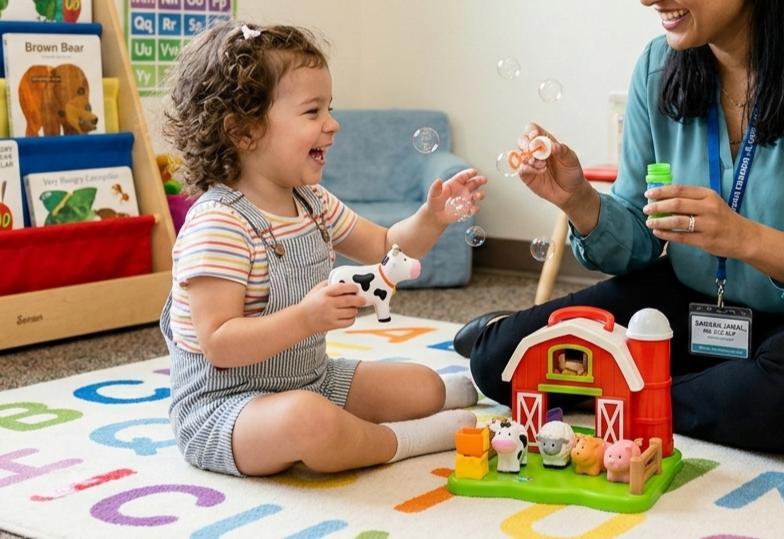
- Sessions: Often play-based for children, either one-to-one or in small groups.
- Home Practice: Home practice and parent coaching.
- Review: Progress is reviewed and the plan is adjusted.
How long it takes depends on the type and severity of the difficulty, age, other medical conditions and how often sessions happen.
KidsHealth says children who start before age 5 tend to have better results, and that parent involvement matters; older children can still do well, but may progress more slowly.
When Should You See a Professional?
You can book an assessment if you notice any of these, or if you are simply worried:
- A child is not reaching speech or language milestones for their age.
- A child loses words or skills they once had. Contact a doctor promptly.
- Sounds are hard to understand well after the age you would expect.
- Stuttering lasts more than a few months or comes with visible struggle.
- Speech or understanding changes suddenly in a child or adult, for example after a stroke or head injury (seek urgent medical care).
- Conversation, turn-taking or reading social cues is consistently difficult.
How AQIDAH Healthcare Can Help
AQIDAH Healthcare is a clinic in Panthapath, Dhaka, serving people from across Bangladesh. Its speech and language service covers:
- Speech delay
- Stuttering
- Adult speech therapy (for example, after a stroke)
Care follows four steps:
- Booking
- Initial assessment
- Treatment plan
- Follow-up
To start, you can book an assessment or call +880 1339-570424.
FAQ
1. What Is Speech Therapy?
Speech therapy is treatment that improves speech, language and communication skills. A speech-language pathologist assesses the difficulty and plans sessions, often with family involvement. It helps children and adults, including people with speech delay, stuttering, autism or communication changes after a stroke.
2. Is Speech Delay the Same as Autism?
No. Speech delay means speech or language develops later than expected and can have many causes, such as hearing loss or language disorder. Autism also involves restricted, repetitive behaviours. A specialist assessment is needed to tell them apart, and they can occur together.
3. Does Oral Motor Therapy Fix Unclear Speech?
Research does not support routine use of non-speech oral motor exercises for speech sound problems, according to ASHA-published reviews. Direct practice of speech sounds is the better-supported approach. Oral sensory work can be relevant for feeding difficulties. Ask your therapist about the goal and evidence.
4. At What Age Should My Child Start?
There is no minimum age. If you have concerns, ask for an assessment rather than waiting. KidsHealth reports that children who begin therapy before age 5 tend to have better results, though older children and adults can also improve.
Safety Note
This article is for education and does not diagnose any condition or replace advice from a qualified clinician. If speech, understanding or swallowing changes suddenly, or someone is in danger, seek emergency medical help immediately. For concerns about your child’s development, speak to a doctor or speech-language pathologist.
AQIDAH Healthcare:
- Email: contact\@theaqidah.com
- Phone: +880 1339-570424
- Address: Firoz Tower (13th Floor), 152/3B, Bir Uttam Nuruzzaman Sarak, Panthapath, Dhaka-1215.
Sources
- NIDCD, Stuttering and Developmental Language Disorder fact sheets (nidcd.nih.gov)
- ASHA, Social Communication Disorder and Autism (asha.org)
- KidsHealth (Nemours), Speech-Language Therapy (kidshealth.org)
- NHS Oxford Health, Speech & Language Therapy (oxfordhealth.nhs.uk)
- McCauley et al. (2009), Effects of Nonspeech Oral Motor Exercises on Speech, American Journal of Speech-Language Pathology
- The Daily Star (2024), Growing up and navigating life with speech disorders
- Khan et al. (2021), Outcomes of Intervention in Children with Language Difficulties in Bangladesh
- Alam & Hand (2022), Speech Language Therapy in Bangladesh